The complete guide
Choosing a record cabinet that fits your room and your décor
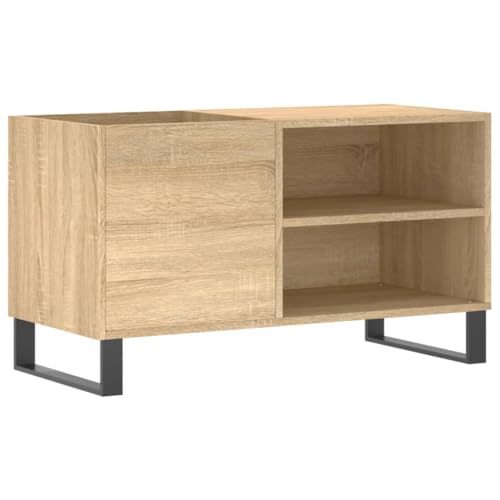
A record cabinet is a decorating decision as much as a storage one — it has to fit the space and suit the room. This guide covers how to choose a cabinet like this Sonoma oak unit so it slots in cleanly on both counts.
Why a cabinet, not a rack
Open racks show a collection off; a cabinet tucks it away behind a clean front so the room reads as furniture rather than storage. If you'd rather your living room looked like a living room than a record shop, a cabinet is the choice — and because it's a low unit with a usable top, it doubles as a sideboard for a lamp, a plant or the turntable itself.
Getting the finish right
Sonoma oak is popular for a reason: it's a warm, light oak effect that's neutral enough to live alongside almost anything. Before buying any wood-tone furniture, glance at the tones already in the room — flooring, other units, the TV stand. A light oak like this generally lifts and blends rather than clashing, and the black iron feet tie it to any metal accents you already have.
Measure before you buy
The single most useful thing about this cabinet is that its size is known: 85 cm wide, 38 cm deep, 48 cm high. Furniture regret almost always comes down to size, so measure the gap you mean to fill — and the route it has to travel to get there — and check it against those numbers before ordering. A defined footprint takes the guesswork out.
Building and caring for it
It's an engineered-wood flat-pack, so assemble it on a soft surface to protect the finish, and stand it on a level floor so it doesn't rock on its feet. Wipe it with a barely damp cloth rather than soaking it — engineered wood dislikes water sitting on its edges — and check the iron-feet fixings now and then once it's carrying a load of records.
The short version
A cabinet keeps your records tidy and your room looking like a room. Pick a versatile finish like Sonoma oak, measure the space against its 85 cm width before you buy, build it carefully and stand it level — storage that disappears into the décor and doubles as a sideboard.